

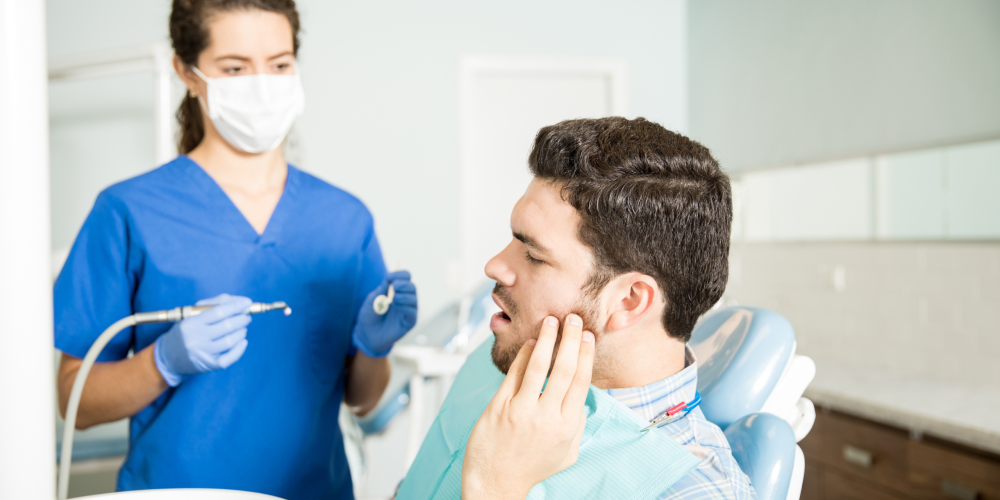
It doesn’t hurt that much. I’ll deal with it tomorrow. This is a common lie people tell themselves when a dental problem appears.
Not every dental problem can wait for your next appointment. Some dental problems require immediate expert attention and prompt treatment, and ignoring them can lead to serious health complications.
Whether it’s a cracked tooth that doesn’t hurt, mild facial swelling that comes and goes, or bleeding gums while brushing, these symptoms often seem harmless but can be threatening signs of a dental emergency.
Here, it’s important to understand the difference between a normal dental problem and a dental emergency so you know when it’s time to seek emergency care and when you can wait until your next appointment. Interested to know? Let’s get started.
What is a Dental Emergency and a Non-Emergency?
Any dental problem that requires prompt attention and can worsen if ignored is considered a dental emergency. The rest of the dental problems that can typically wait for treatment and don’t pose an immediate risk are considered non-emergency dental problems.
Common Emergency Dental Problems
Here are some common dental emergencies and why they require immediate dental treatment. Understanding these dental emergencies in detail will help you handle emergencies effectively and manage pain and discomfort.
- Intense tooth pain: A toothache is often ignored or dismissed as just normal pain that will go away on its own. However, if the toothache is persistent and intense, it is not a normal toothache; it is a warning sign that may indicate deep tooth decay, a dental abscess, a nerve infection, or an advanced stage of gum disease. So if you are experiencing severe, throbbing pain that keeps you awake at night, seek emergency dental care as soon as possible.
- Gum swelling: Swelling in the gums or face should never be ignored, as it can be a sign of a serious infection that may spread to other parts of the body if left untreated. Especially if the facial swelling is accompanied by other symptoms such as fever, problem swallowing or breathing, it is crucial to seek emergency dental care.
- Broken tooth: A broken or cracked tooth may be a dental emergency. If you are experiencing pain, bleeding, or sharp edges, it increases the risk of infection and damage to surrounding tissues. So it should be treated as a dental emergency.
- Uncontrolled bleeding: Many individuals experience bleeding while brushing teeth. However, if it doesn’t stop after dental surgery, it is considered abnormal bleeding if it keeps recurring when brushing. Consider it a dental emergency and get immediate care.
- Dental abscess: A dental abscess is a painful, pus-filled infection that forms around the tooth and gums; if left untreated, it can spread throughout the body. The common symptoms of a dental abscess include swelling, gum pain, fever, facial swelling, and throbbing pain.
Common Non-Emergency Dental Problems
Some dental problems do require treatment to prevent further damage; however, they don’t require immediate attention and can wait. Some of these dental problems include;
- Mild Tooth Sensitivity: We often experience sensitivity to hot and cold foods. This can happen due to enamel wear, a minor cavity, or gum recession. Mild sensitivity usually doesn’t require immediate attention.
- Lost Dental Restoration: Lost dental restorations (fillings or crowns) are meant to protect damaged teeth; however, losing a restoration can expose the damaged tooth and pose a concern. But in some cases, it is not considered an emergency dental problem unless it is causing severe pain or sensitivity.
- Trapped Food Between Teeth: This is another common dental issue, where foods like popcorn, seeds, and fibrous veggies can get stuck between your teeth and lead to discomfort and pressure on the gums, difficulty chewing, gum tenderness, and bad breath. However, it is not concerning unless it persists.
- Cosmetic Imperfections: Dental problems that affect your teeth and the appearance of your smile are also non-emergency issues because they do not pose an immediate threat to oral health. These problems include yellowing or discolouration of teeth, minor chips or gaps, uneven teeth, or smile concerns.
- Slight Gum Irritation: Occasional gum irritation or bleeding due to aggressive brushing, skipping flossing, or food particles stuck between teeth is not considered a dental emergency. Common symptoms include gum tenderness, minor bleeding, or slight swelling. However, these shouldn’t be ignored for long.
Reliable Emergency Dental Clinic in Burleigh
If you are looking for a reliable dentist in Burleigh, look no further. At Dentist of Burleigh, we have a team of dental experts dedicated to providing personalised care and tailored dental solutions for desired results. Whether you are experiencing a normal dental problem, a dental emergency or a major dental surgery, we have got you covered. Book your consultation with our experts today and transform your oral health.
Frequently Asked Questions
What to do in a dental emergency?
If you are experiencing a dental emergency such as throbbing tooth pain, a broken tooth, a broken dental restoration, gum swelling or bleeding, then you should immediately visit your nearest emergency dental clinic for prompt treatment. Ignoring the situation will only worsen it, costing you more time and money in the future.
Is facial swelling always a dental emergency?
It depends on the symptoms you experience along with the facial swelling. If it is accompanied by fever, difficulty in swallowing, or breathing problems, then you should seek emergency care.
Is a chipped tooth a dental emergency?
If you have a minor chip without pain, it is not an emergency. However, if you are experiencing severe pain and the fracture is large, exposing the root structure, it requires immediate attention from a dental expert.